Conversion from Atheism

A testimony by Douglas Dorrough, Ph.D., presented at Pacific Union College, Angwin, California. Introduction by R. Dean Jennings, M.D.
Introduction by Dr. R. Dean Jennings
In a few moments we will hear an amazing story. It is a story of God's wonderful grace and the power of the everlasting Gospel to save all who accept and believe. Dr. Dorrough spent many years sojourning in the land of atheism until he came face to face with the Saviour. And now to the God he formerly scoffed at and laughed at, he gives all the glory and honor to his name. Dr. Dorrough has an MA degree in Philosophy and Science, an MS degree in Physics and Mathematics. He has a doctorate degree in Biochemistry and another doctorate in Mathematical Logic. Dr. Dorrough, we welcome you to Pacific Union College.

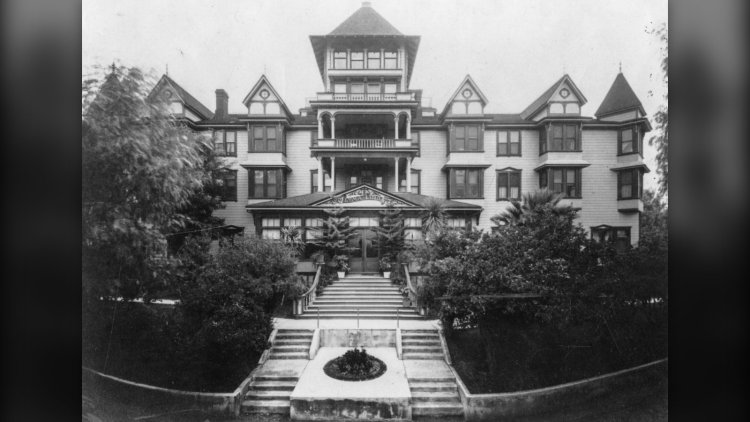
Pacific Union College, Angwin, California, where Dr. Dorrough gave this talk.
A Wholehearted Belief
Thank you, Dr. Jennings. . . .
I suppose the thing that concerns me is that one seems to be at loggerheads with oneself if one does not commit himself very wholeheartedly to a firm belief that there is a God, that he is very active in human affairs, that he is loving and kind, that he is interested in the activities of each one of us.
Perhaps before going on, you will permit me to quote from Proverbs 9:10-11. I am sure you've heard it many times, and I am not repeating it now to bore you but only because I think it is very relevant to the rest of my discussion.
"The fear of the Lord is the beginning of wisdom and the knowledge of the Holy is understanding. For by me thy days shall be multiplied and the years of thy life shall be increased."
The Kind of Atheist I Was
Not many years ago, in fact no more than four, I was an atheist. There are all sorts of atheists. There are atheists who, like Christians, jump on the bandwagon of atheism. It is the avant-garde thing. It is the thing to do when you are in college. It is the sort of radi-chic-type behavior.
There are also atheists who write letters to the newspaper debunking theism, spending time and making efforts to cause theism to look foolish or incompatible with the culture in which other people live.
There are also atheists, and I am sure you have heard of them, who take civil action against theists. They condemn prayer in the public schools and they ask the U.S. Mint to strike the phrase, "In God we Trust" from the coinage of the land.
There are also atheists who bind together in societies and groups.
And there are atheists who spend their time very much and very pre-eminently with the concepts of atheism; that is, the philosophical foundations, the very bases of atheism.
I was the latter type of atheist. I spent some time, not all of my time but quite a bit, more than I should have certainly, writing papers and contributing them to journals, particularly in the area of philosophy and science. These papers in the main were in support of an atheistic doctrine and atheistic foundation, an atheist basis if you please, for the world in which we live, including the science and technology that we depend on so readily and so capably in many cases.
In order to give you a flavor for what sort of atheist I was, please permit me to read an abstract from a paper that I delivered at the International Congress for the Philosophy of Science in New York in 1965. The title of the paper, "Is God a Meaningless Concept?"
"If one espouses the definition that the term universe refers to the totality of existing things, including events, properties and relations among those things, then the emergence within the Universe of new entities, events, relations, et cetera, can be explained quite satisfactorily in terms of the actions and entities that already exist.
Thus under proper ambient conditions, the cause of a tree is the seed of the parent tree. The cause of a machine is the purposeful reshaping of matter by man. Under appropriate conditions the cause of an infectious disease is the virus or bacteria repeatedly associated in a particular way with the symptoms of the disease.
Hence we may say that all actions presuppose the existence of entities, and all emergences of new entities presuppose the existence of entities that caused their emergence. In sum, all causality presupposes the existence of something that acts as a cause.
Therefore to demand a cause for all existence, that is the entire universe or even this world, is to demand a contradiction. If the cause exists it is a part of the universe. If it does not exist, it cannot be a cause.
If the God propagators maintain that there is the universe and then there is God, as though they are separate and distinct, then we must conclude with Huxley, Russell and others that Biblically-based notions of God's infinity and omnipotence must go by the board.
Thus we conclude that when defending their position about God, theists are either deliberately talking nonsense or are simply muddle-headed."
At the time I wrote that, I thought it was pretty clever. Now I think it is hogwash. And the question to ask, of course, is the obvious one, why? Some of the reasons in answer to that question why are to be the subject of my presentation tonight.
The Sky Lab Problem
I suppose that the series of episodes that led me to change my mind radically began about four years ago, in fact a little more than that. It was more like four and one-half years ago, when I was working for the McDonald-Douglas Corporation in their Space Physiology Laboratory on the Sky Lab Program.
Those of you who are acquainted with recent newspaper articles concerning the Sky Lab probably know that it is a manned orbiting space laboratory that at one time housed four to six astronauts and those astronauts stayed in the space laboratory for approximately 30 days. And then they were replaced by four or five more.
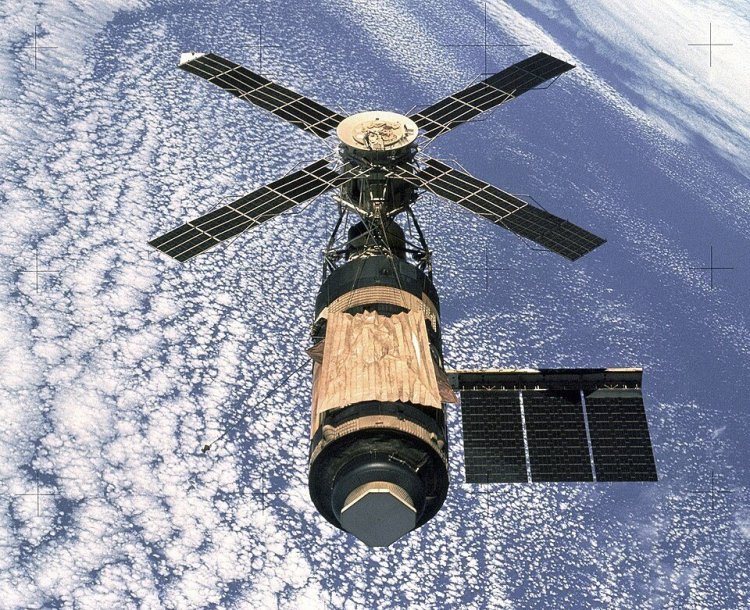
Skylab in orbit, photographed by its final crew in February 1974. (NASA)
The laboratory, of course, is currently in jeopardy of its "life." NASA has been trying to boost it into higher orbit in order to keep it from being brought down into the earth's atmosphere more and more and finally burning up or destroying itself in various bits and pieces to be distributed around over the nation and the rest of the world.
The Sky Lab Program was a very, very carefully conceived program as were, of course, several programs by the National Aeronautics and Space Administration. The particular problem, however, with Sky Lab was one that dealt with human physiology.
The members of the Sky Lab team knew, both from experiments with primates as well as some information that was brought back from the earlier Apollo series, that the longer a human or a mammal is in an environment with no gravity, the more likely is that human or that mammal to begin functioning atypically physiologically. Large particulate matter, large that is for the space to be occupied, is deposited out in the kidneys. Certain enzymes for processing food failed; that is, the generation of those enzymes in the liver does not take place. The gastrointestinal tract does not work well. And even the human brain suffers when not at least frequently in touch with gravity.
Now it was known that we could create artificial gravity by first of all having a sufficiently massive Sky Lab and then spinning that Sky Lab about its own axis. The large problem, of course, was how fast did we have to spin it in order to maintain the appropriate physiology for the astronauts that would be contained therein.
One of the particular problems that I faced at this particular time was the generation of a set of second- and third-order partial differential equations that would relate the physiology of the astronaut to the spin properties of the satellite itself. Now those of you who are in math and physics perhaps know that partial differential equations at best offer difficulties in solution, and second- and third-order ones are real bears.
To compound the problem, some of the driving functions and boundary conditions were variable. They were not constant, and we had to appropriately adjust the solutions to the equations according to the conditions in the driving functions. It was an intriguing problem and one that eventually got solved.
It was in the midst of the solution of this problem, however, that something cropped up that, I think, was far more important than the solution to the equations being addressed.
"Get Yourself to a Physician"
While working away on this, I began to have what I call sort of an obsessive-compulsive condition. It was really something akin to a catchy tune that sometimes an individual, you or I, may find ourselves repeating over and over. Only this was not a catchy tune. It was in the imperative mood and it was very simply the phrase, "Get yourself to a physician."
After approximately two days of not being able to rid my mind of this imperative, I decided to take the route that an awful lot of atheists do for getting one's head screwed on correctly. I went around to the local bar for a couple of stiff Martinis. Only the Martinis did not work. The phrase kept coming back to me so frequently and so insistently that I was gradually unable to do my work. This went on and on for approximately two weeks. I began to lose sleep because I could not sleep at night. All I could listen to in my mind's ear was the imperative, "Get yourself to a physician." I was even becoming a menace on the road in driving to and from work.
Finally after this had gone on for approximately two weeks, and while I was at work one day, I called my wife and asked her to locate a physician for me because I had no regular physician. She asked me if I had any particular kind of physician in mind and I said yes, I would like to have an internist. She knew no names herself. We were, at that particular time, and still are, residing in Corona, California. So she went to the Corona directory and went to the Yellow Pages of the directory, and looked under internal medicine and came up with a substantial list of internists for both Corona and for Riverside, which is approximately 10 to 15 miles away. She picked a particular man who happened to be quite full at the time. He was taking no new patients, but his colleague was taking patients, so she made an appointment for me to see his colleague. That colleague is the man who introduced me tonight.
The Doctor Who Prayed
Approximately four or five days later, I went in to see Dr. Jennings and he gave me what he termed the "Cadillac of physicals." It was very, very thorough. But before I go into what he did, as far as medicine is concerned, I would like to tell you what he did before he even started. I waited the usual amount of time in Dr. Jennings' waiting room and then was taken to a treatment room and waited some more, and finally he came in and introduced himself and smiled, and he said, "Before I take on a new patient, I usually pray. Do you have any objections?" I sneered and said no, that I didn't, but I didn't think it was going to do any good.
I am actually recalling from memory what he said, but as I recall, it was very close to the following:
"Lord, make me an instrument of thy healing. Strengthen my hand, my perceptions and my judgment. Let me bring to this man the best that you can give and know that you can give and have given to those on this earth before him, for I ask it in Jesus' name. Amen."
One of the procedures performed is something that is referred to as a sigmoidoscopy. For those of you who are unfamiliar with this, it consists of introducing through the rectum into the lower bowel a reasonably large and reasonably long lighted instrument for examining the lower bowel. It also has the facility for extracting minute particulate matter of any sort from the area being examined.
When Dr. Jennings began this he arrived at a particular area of the human anatomy called the sigmoid. For those of you who are unacquainted with the human anatomy as far as the lower bowel is concerned, it looks something like a sink trap. It is an S-configured system, and to get a very long, straight instrument past that kinking in the bowel is extremely painful for the patient, or can be.
Consequently when Dr. Jennings came to that point, or so he told me, he didn't know whether he should go on. But something urged him on and he did, and after he passed in and around the sigmoid area, he found what is referred to as a polyp. A polyp is a growth or a lesion of the gastrointestinal tract formed from the mucosa of the tract. It is hypertrophic in nature and has malignancy potential. Dr. Jennings removed the polyp at the same time or very close after discovering it. He sent it off to a pathology lab. I went on with the physical and then went back to work.
In driving to work the next morning, I no longer had the obsessive-compulsive phrase that kept cropping up in my mind. In fact it never came back.
About four or five days later, I was on one of the computers at McDonald-Douglas, working out another problem that had cropped up in connection with the solution of the equations that I discussed earlier. My secretary came to me and said, "A Dr. Jennings is on the phone and wishes to speak with you. Do you have time to break?"
I told her that I did and indicated that I would take the phone call in my office. On the way to my office it occurred to me that there must have been something wrong with the polyp, because I knew fairly well that I had passed the rest of the physical with flying colors.
When I came on the phone, Dr. Jennings said, "Dr. Dorrough, you are either a very, very (and he repeated the word very five times) lucky man, or the Lord loves you very much." He proceeded to tell me that the polyp was malignant. It was, however, an in-situ malignancy. That is, it was confined to the place where it originated, that is, where the mitotic figures, the unusual cell divisions, started.
Dr. Jennings also indicated to me that if I felt that the Lord really loved me, he would be very, very happy to put me in touch with someone at the Seventh Day Adventist Church in Corona who could come and talk to me about the Adventist message to people like myself.
I told him that I would be interested in contacting someone, but I wanted time to investigate. Because one of the things that I wanted to find out was, how lucky was I?
How Lucky Was I?
Consequently during the next 11 months, I spent a large amount of time, actually it was time taken from periods of sleep, time taken from lunch, and in some cases time literally taken from my work (but not in any sense that would mitigate against my getting results). I was very fortunate to have a boss who was quite interested in what I was doing. As a result he told me that so long as I got the work out, he didn't care what hours I kept.
Through Dr. Jennings' efforts, I gained entrée to the medical library at Loma Linda University, and particularly to the various on-line, computerized library systems associated with medical literature throughout the world.
It did not take me very long to become an authority about polypoid lesions of the gastrointestinal tract. I found out very quickly all that was absolutely known about such lesions, not only their morphology, their etiology (that is, how they get started), but also all that is known about their statistics and likelihood versus age, sex, lifestyle, position in the gastrointestinal tract, et cetera.
All of this information was fed into a bank of computers at McDonald-Douglas. Perhaps I should break here and tell you a little bit about that.
The Sky Lab Program at McDonald-Douglas had six IBM 370/185's back to back at its disposal. Now for those of you who are in computer science, or related at all to computers, you should know that a 185 with both virtual and real memory, is a tremendously powerful instrument. Coupled with this, the Sky Lab Program had some computer software that amounted to the exercising of various statistical distributions in a fairly randomized fashion. For those of you again who are in computer science or in math, I am talking about a very, very large-scale Monte Carlo program for simulating different kinds of situations. This program was originally generated in order to determine the likelihood of events, or at least the range of the likelihood of events, where the underlying statistical distribution of those events was unknown. What might that be?
Well, supposing the astronauts were up in the Sky Lab and a solar flare was generated several months before they were up there. What was the likelihood of those astronauts within the confines of that Sky Lab, orbiting at the speed that they were, encountering a flux density of electromagnetic radiation beyond that which their bodies could stand? Now that was unknown. But there were ways of trying out different likely distributions and getting ranges. And that is what that program did.
I took that program and used it to determine the likelihood of a sequence of events, for many of which the underlying distribution was definitely unknown. And the sequence of events that I am referring to are those that I have been unfolding in front of you now.
What I essentially wanted to know was what was the likelihood of someone randomly, through a telephone directory, picking up the name of an Adventist doctor. What was the likelihood of that doctor praying openly and frankly before a patient. What was the likelihood of the particular lesion that I had being found when it was, when it was still in-situ, and so on.
But I didn't only want to know all of those details. I also wanted to know what was the likelihood of all of those events concatenating, that is, coming together in the sequence in which they did.
As you might suspect it took a long time to first of all gather the existing data, and it took just as long to take distributions and plug them into the computer simulation and try them out. It took even longer to get the probabilities and the concatenation of the probabilities associated with the various events that were involved.
Approximately 11 months after Dr. Jennings removed the polyp, I had some answers. The answer that really means something, because it is with regard to the series of events taking place the way they did and when they did based upon all of the sub-events involved, came out in the form of a range. At the lower end of the range, that is, where that concatenation of events was to be most likely, amounted to 1 in 10 billion. The upper end, where it was least likely to occur, was 1 in 20 trillion.
Now, one of course could ask oneself about the population of the world, which is what I did. I suppose you could ask a number of questions. You should know, if you don't already, that 10 billion exceeds the number of people who have lived on the earth, insofar as we can make that estimate, in recorded history. And 20 trillion exceeds it by several orders of magnitude.
Now this meant to me that the likelihood of this occurring purely by chance was so very, very, very remote as to be almost impossible.
I'm not someone who is given over to weeping, but when I had the final results to this I wept bitterly.
Baptism and the Cost of Discipleship
I told Elder Farley, the man who Dr. Jennings had put me in touch with, and from whom I had been receiving some instruction during the period of time when I was trying to calculate how lucky I was, that I would like to be prepared for baptism. And approximately six weeks later I was baptized in the Corona Seventh Day Adventist Church.
I am almost invariably asked how it feels to be an Adventist. I really don't know how to answer that question in any really clear, definitive way. So I always have to answer it sort of open-endedly.
I'm not going to stand here and tell you that being an Adventist is easy, because it is not. But I don't think anyone in this world has been called by our Lord to an easy life. He didn't call himself to one, and he asks us to follow in his footsteps.
Some of the problems I had were really ludicrous and trivial. I know that some of you, perhaps all of you, will find this hard to believe, but even today if I am in a restaurant and someone is served a Maine lobster, I regularly salivate very vigorously.
I had problems also with my colleagues. Most of them thought that I had flipped out completely. And they got together in various clusters and groups to see what they could do for addlepated Dorrough. In some cases I would find myself invited to lunch and if I was not driving the car, we would invariably be taken to a topless go-go joint or something like that. Some of my friends intimated that what I needed was a little more booze, and so I would come to work in the morning and there would be a very expensive bottle of bourbon sitting on my desk. It was very difficult to convince these people that I was serious.
I did, however, have no trouble convincing my boss. Dr. Hausholder, a rather famous mathematician, and he had been interested in what I was doing right from the first. And every two or three weeks he would drop by my office and say, "Where are you now? What are the results? What are you doing?" We would chat and then he would leave.
After he got a copy of the final results, he and his wife, who were both atheists, began taking Bible study lessons. And these were out of the Adventist Center located in the San Fernando Valley.
I later heard that Dr. Hausholder was converted and baptized and so was his wife. I also heard, only about a month ago, that Dr. Hausholder and his wife were killed in an aircraft accident in Montana.
I suppose the hardest thing for me is being married to someone who is an agnostic. My wife has been very kind to me. It isn't, after all, very easy to convert a home that has been meat-eating and flesh-eating to vegetarian, particularly with some of the cookbooks the Adventists have put out, but she has tried. And even though she finds it difficult to understand why I am in the position I am in, she has been a very, very good spouse. And I guess my constant prayer is that someday she will join me.
It is also not very easy, particularly if one has two children like I do, who are extremely active and in fact downright impish, maybe even spoiled, to sit still during the Sabbath service, to go through cradle roll or kindergarten without stirring up trouble and riling their teacher. But those are all minor. They are really very, very minor.
Why Me?
I think the important thing that concerns me is why. I don't know all of the reasons why the Lord decided to give me an extension of life. He certainly had no reason from the standpoint of my kindness to him, because I literally sneered at him. He had no reason, out of any particular wellspring of reasons that we humans frequently come upon.
But I am often reminded of the scripture passage, "My thoughts are not your thoughts. My thoughts are above your thoughts." I do know that in several places where I have given this very same presentation, where people have listened very kindly to me, there have been atheists, and some of them have apparently been touched.
But I really don't think that is the whole reason, so I can't really tell you what the reason is completely. Except that I am very happy. Atheists in many ways are a sad lot. They have nothing to hang onto except themselves, and sometimes that is a paltry little bit.
The problems that I used to wrestle with, some of them very real, fundamental problems, I now give over to the Lord, and he takes care of them. I never know exactly how he is going to take care of them, and I am always amazed at the beauty, the depth, the profundity, the long-rangedness of the solution.
I would like to urge you to consider what has been given to you, perhaps from the day you were born or very close thereon, to be very, very precious. You have every right, of course, to be proud of the Adventist Church and the things it has done. But that is not a reason for being an Adventist. Because you have a very fine college campus here, because you have architecturally quite a large outlay of money and input and effort and struggle and so on, is not a reason for being an Adventist. It is rather something that should flow from the Adventism.
I ask you to consider what you have, think about it, think about the people who are out there who do not have it and who are living in a dog-eat-dog type of world, or in a world where there is no hope, where there is no ultimate goal, where there is no eschatology, so to speak, where there is no belief in a transcendental intervention in your life, my life, in everyone's life, where the notion of a forbearing, honest, truthful, sustaining, loving God is unknown, because that is what it is like.
I think that I would like to end this, if you will permit me, with another quotation from Scripture. It is one I'm sure you have heard many, many times. But it certainly applies, I believe, to me. It is taken from John's Gospel, Chapter 20, Verse 19 going forward.
"Then the same day at evening, being the first day of the week, when the doors were shut where the disciples were assembled for fear of the Jews, came Jesus and stood in the midst, and saith unto them, 'Peace be unto you.' And when he had so said, he showed unto them his hands and his side. Then were the disciples glad, when they saw the Lord. Then said Jesus to them again, 'Peace be unto you: as my Father hath sent me, even so send I you.' And when he had said this, he breathed on them, and saith unto them, 'Receive ye the Holy Ghost: whose soever sins ye remit, they are remitted unto them; and whose soever sins ye retain, they are retained.'
But Thomas, one of the twelve, called Didymus, was not with them when Jesus came. The other disciples therefore said unto him, 'We have seen the Lord.' But he said unto them, 'Except I shall see in his hands the print of the nails, and put my finger into the print of the nails, and thrust my hand into his side, I will not believe.' And after eight days again his disciples were within, and Thomas with them: then came Jesus, the doors being shut, and stood in the midst, and said, 'Peace be unto you.' Then saith he to Thomas, 'Reach hither thy finger, and behold my hands; and reach hither thy hand, and thrust it into my side: and be not faithless, but believing.' And Thomas answered and said unto him, 'My Lord and my God.'"
Brothers and sisters, that's where I am.
Thank you.
About This Testimony (Editor's Note)
This transcript was received from Dr. R. Dean Jennings himself, the physician at the centre of the story, who also introduced the speaker on the day. It is reproduced from his typed copy of the talk. Wording is kept as delivered, with only obvious typing errors corrected. A short passage near the opening has been omitted, as marked by the ellipsis. The talk appears to date from the late 1970s: the speaker describes Skylab as still in orbit and NASA working to boost it, and Skylab re-entered the atmosphere in July 1979.
About Dr. R. Dean Jennings
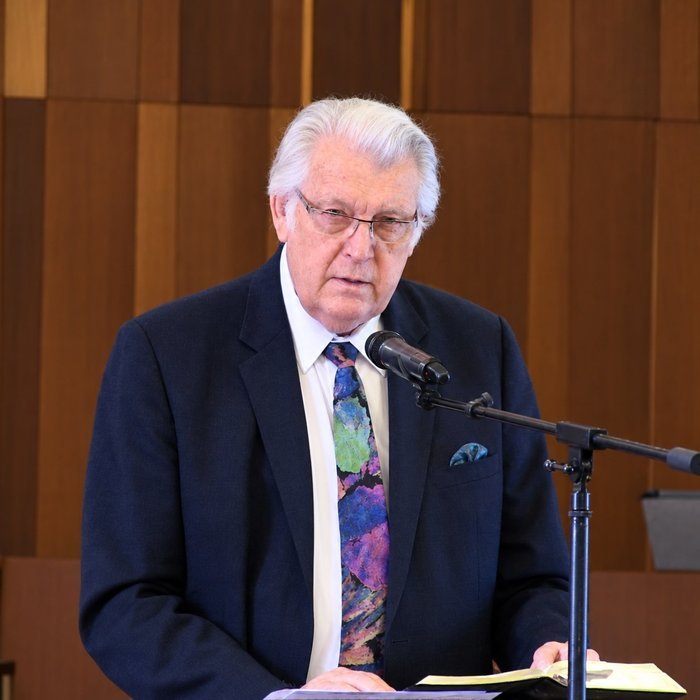
Dr. R. Dean Jennings
Dr. R. Dean Jennings (born 1934) is a Seventh-day Adventist physician in California. According to the records of the General Conference Archives, he studied at Walla Walla College (now Walla Walla University) from 1953 to 1958 and at the College of Medical Evangelists (now Loma Linda University) from 1958 to 1962. He completed his residency at White Memorial Hospital in Los Angeles from 1963 to 1967, and then served as a missionary physician at Bangkok Sanitarium and Hospital in Thailand from 1967 to 1973. He later practised internal medicine in Southern California, where this story took place. Today he serves as an elder of the Fort Bragg Seventh-day Adventist Church in California.
About Dr. Douglas C. Dorrough
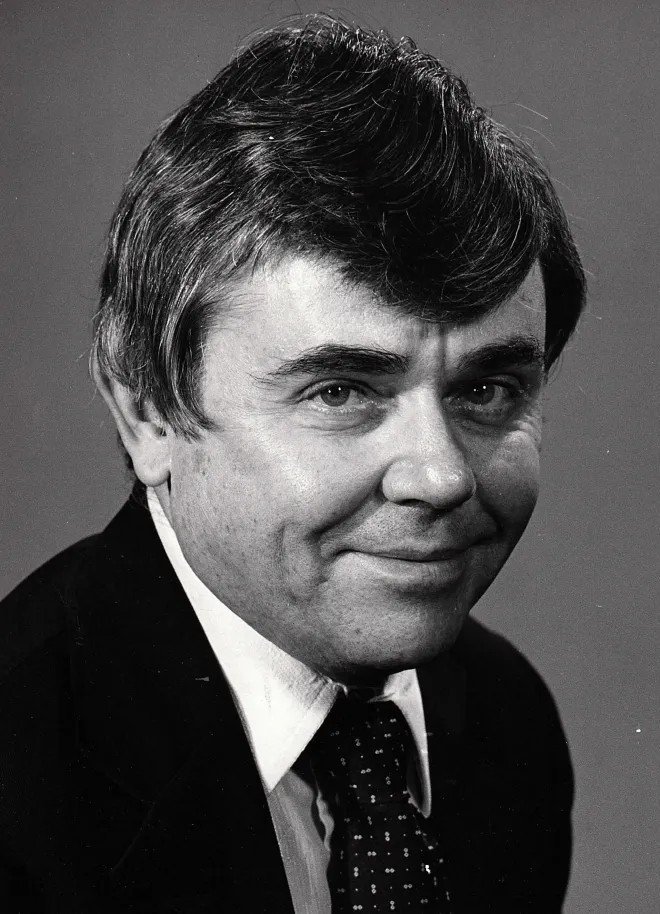
Dr. Douglas C. Dorrough (Photo: D. C. Dorrough Memorial)
Douglas C. Dorrough, Ph.D., was born in Hawaii on 13 January 1927 and died on 29 March 2015. A memorial website kept by his family records the following. At 16 he won a scholarship to the Courant Institute at New York University. He earned a B.S. from the University of Dayton (1949), an M.A. in Philosophy of Science and an M.Sc. in Mathematical Physics from the University of Hawaii (1953–54), and a Ph.D. from the University of North Carolina at Chapel Hill (1964), in the field of logic and philosophy. These match the degrees Dr. Jennings lists in his introduction.
From 1964 to 1970 he was a Senior Scientist at the McDonnell Douglas Advanced Research Laboratories in Huntington Beach, California, the company that built the Skylab orbital workshop. He later spent time as a Scientist in Residence at the Cavendish Laboratory, Cambridge University, and consulted on the Apollo–Soyuz docking mission. From 1974 to 1979 he served as Associate Professor of Biochemistry at Loma Linda University School of Medicine, the Adventist medical school mentioned in his talk. His later career included work with the Howard Hughes Medical Institute, the Boeing Advanced Technology Center and California State University, along with published papers on computer reliability, robotics and artificial intelligence. He was survived by his wife, Victoria, and his sons, David and Mark.
Why We Share This Testimony
We publish this testimony as we received it, for its witness to God's providence and to the prayer of a Christian physician. A brilliant man who had spent years building arguments against God's existence was led, step by step, to a doctor who would not begin his work without asking God to make him "an instrument of thy healing." That simple prayer, offered to a patient who sneered at it, became the turning point of a life. Without knowing it, the physician who prayed and searched carefully was the answer to the warning that would not leave Dr. Dorrough's mind: "Get yourself to a physician."
This is medical missionary work at its heart. This is sōzō: Christlike care for the body opening the way for Christlike care for the soul. Dr. Dorrough measured the odds of it all and wept. We invite readers to weigh the story for themselves, and to see in it the God who "shall supply all your need" (Philippians 4:19), who goes before us into ordinary places like a doctor's consulting room, and who still meets the doubting Thomas with "Peace be unto you."
Sources: General Conference Archives, Dean Jennings Collection (MS 15); D. C. Dorrough Memorial (dcdorroughmemorial.com).
Header photo: Patrick Fore / Unsplash
Take it further
Did this speak to you? Ask for more, or ask us to pray with you.
Comments 0
No comments yet. Be the first to share a thought.