The Boy Nobody Had Heard Of
Gospel in Action
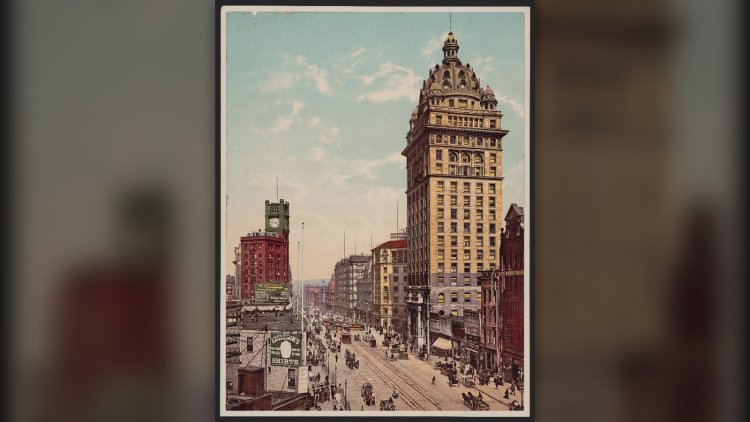
A teenager nobody had heard of was chosen by the church’s most fruitful health evangelist. The line from that choice runs through a San Francisco field school to Wildwood and to ASI.
God looks on the heart
When Samuel went to Bethlehem to anoint a king, Jesse did not even call his youngest son in from the sheep. But God had already chosen him. “The LORD seeth not as man seeth; for man looketh on the outward appearance, but the LORD looketh on the heart” (1 Sam. 16:7).
Jesus trained His workers the same way. “He ordained twelve, that they should be with him, and that he might send them forth to preach, and to have power to heal sicknesses” (Mark 3:14, 15). They learned by being with Him, and they were sent to do two things together: preach and heal.
This is the story of a teenager nobody had heard of, an evangelist who saw something in him, and a work of healing and preaching that still reaches the world today. Paul’s counsel fits him well: “Let no man despise thy youth” (1 Tim. 4:12).
A boy and a course
W. D. Frazee, called Bill, was born on February 15, 1906, near Phoenix, Arizona.1 He had never attended an Adventist school, apart from the lessons his mother taught at home. He grew up working the family garden, ran a small printing business, kept the health message faithfully, and believed the Spirit of Prophecy with all his heart.2
At sixteen he applied to the medical missionary course at the College of Medical Evangelists in Loma Linda, California.1 The course was not for physicians. It trained medical evangelists: workers who could teach health, give simple treatments and lead people to Christ. On paper, Bill hardly qualified. The college asked for twelve grades of school work or an equivalent, and only the faculty could make an exception, “giving consideration to the questions of age and experience.”2 He was a sixteen-year-old taught at home, with little of either. Getting in was a struggle, yet the door opened, and that fall, at seventeen, he took his place in the class. He did so well that he was allowed to take classes from the medical course too.1 It was a narrow door. That course was never offered again.2
The evangelist in the chemistry class
The evangelist was J. H. N. Tindall (1880–1972). As a young man he had been an outspoken atheist. In 1908, while prospecting for gold in the mountains of San Diego County, he lodged with an elderly man known as “Daddy Bell,” who ate no meat, kept the seventh-day Sabbath and answered every hard question from the Bible. Through those Bible studies and The Desire of Ages, Tindall gave his heart to Christ.3
He trained at the new school at Loma Linda and became the church’s pioneer of gospel-medical evangelism. His campaigns joined Sunday-night preaching with health lectures, cooking classes, home nursing and free treatments in people’s homes. When the famous revivalist Billy Sunday held meetings in Oklahoma City at the same time, a local paper observed, “Sunday got the crowds, but Tindall got the converts.” The Review and Herald reported that “Oklahoma City probably had the most successful single city effort ever held in the history of our work.” Between seventy-five and ninety percent of his converts stayed faithful.4
In 1923 Tindall stepped away from preaching to study dietetics at Loma Linda, so that he could answer physicians who said he was not “professionally trained.” Chemistry gave him trouble. The student who helped him through it was seventeen-year-old Bill.5 The two became friends, and Tindall made the teenager a promise: “Yes, Bill, I’m coming to get you someday.”6
“That’s why I want him”
About two years after their studies ended, the call came. Elder G. A. Roberts, president of the California Conference, told Tindall that the conference had studied the testimonies about San Francisco and wanted him to carry out a gospel-medical missionary program for the city.6 Roberts planned a school where workers would learn Tindall’s methods by doing them. He had money for only one more salary, but he promised Tindall the best man in the conference. Tindall had only to name him.7
Tindall asked for Bill. Roberts had never heard of him. When he learned that the young man had no Adventist schooling, was too young to vote and had never held a church position, he was even less pleased. Tindall would not budge. Bill was fully given to the Lord, faithful in health reform and loyal to the Spirit of Prophecy. And because he had no professional experience, Tindall could train him from the start, with nothing to undo.7 Tindall won. Bill became his partner and, in time, one of the teachers in the school.3,7
Ellen White had written of such workers: “They may not have time to obtain all the education they desire, but the great Teacher understands. What He calls for is the willing devotion of heart and mind. When this is given Him, He will fit the givers for His service, in spite of apparent difficulties and obstacles.”8
Doors that opened in San Francisco
The Field Training School for Gospel-Medical Evangelism taught its students in the city itself. Its forty-eight-week course joined Bible study, field Bible work and evangelistic meetings with anatomy and physiology, hygiene, foods and cooking, dietetics, home nursing and hydrotherapy.9
The health message opened doors that preaching alone could not. Tindall lectured at the Masonic Club in the Palace Hotel to about four hundred of the city’s leading citizens, among them a railroad executive, hospital staff and business leaders. Demand brought him back for a second lecture. Then he was invited to speak to the naval medical staff at Mare Island, where Admiral Barber said, “That lecture should be in every battle ship in the United States Navy.”10
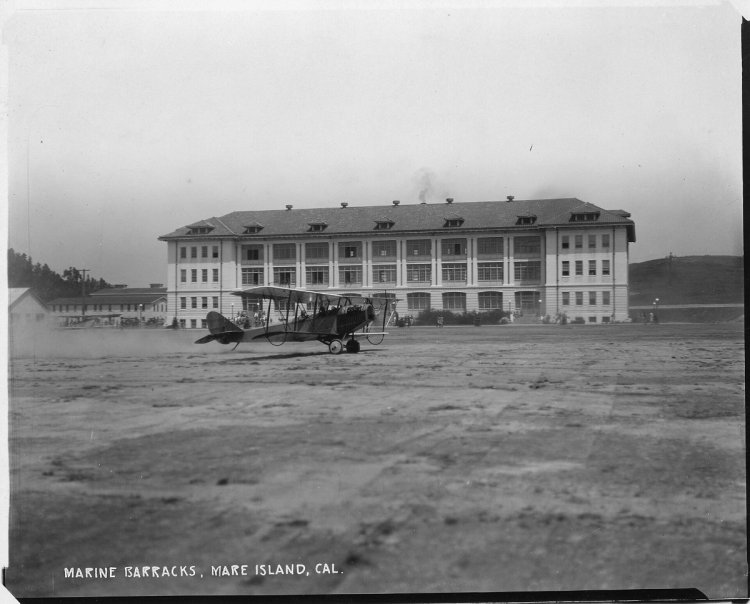
Marine Barracks, Mare Island Navy Yard, California, about 1920. U.S. National Archives. Public domain.
Looking back, Elder Roberts listed the fruit: a considerable increase in tithe and mission offerings, more missionary work among the members, souls converted through the meetings, new treatment rooms, a new church building, and much goodwill from lectures to clubs, civic groups, and the police and fire departments.11
One court case showed how far the message had earned respect. A boy had been adopted into an Adventist home, and his former family sued the conference because he was not being given meat. Tindall defended the family with scientific evidence for a vegetarian diet, and he presented Bill as a young man who had never tasted meat. The case was dismissed, and the family who brought it was ordered to pay the costs.11
The school did not last. In 1932, with the Depression pressing and a new conference president in office, it was closed.12 But Roberts never doubted its worth. In 1937 he wrote to Tindall that what “Elder Frazee” and others were doing “is perpetuating the example,” and that “some day … out of the example of that San Francisco Field Training School will be crystallized a denominational program that will be world-wide.”13
From the Field School to Wildwood and ASI
Bill carried what he had learned. After his years beside Tindall he held meetings in the San Francisco area and was then called to Utah as a gospel medical evangelist. When the Depression left no money to pay helpers, he invited professionals to join him as volunteers. That faith ministry became the foundation of the Wildwood Medical Missionary Institute, founded in Georgia in 1942, where he taught medical missionary classes and the Bible for the rest of his working life.1 Tindall himself spoke of “little Wildwood” and longed to see it reach its full potential.14
Wildwood belonged to a growing family of self-supporting institutions: schools, sanitariums and medical missionary centers run by lay people who supported themselves. Their roots went back to Madison College, founded near Nashville, Tennessee, in 1904 by E. A. Sutherland and Percy Magan. In 1946 the General Conference created a Commission on Rural Living and called Sutherland to lead it. In 1947 the self-supporting institutions banded together as the Association of Seventh-day Adventist Self-Supporting Institutions, ASI. In 1979, as its members came to include businesses and professionals, it took the name it bears today: Adventist-laymen’s Services and Industries.15 ASI still helps fund Wildwood’s work.16
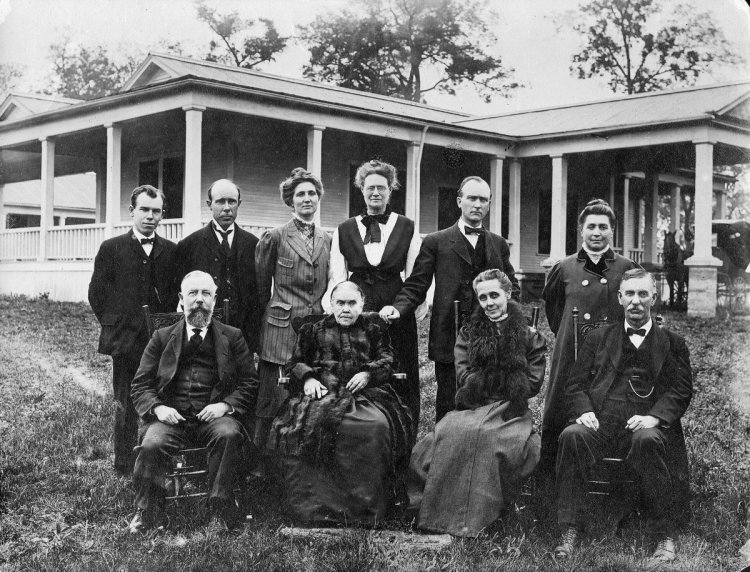
Ellen G. White (seated, second from left) with the staff of Madison College, about 1909. Percy Magan and E. A. Sutherland stand in the back row. Adventist Digital Library. Public domain.
The thread runs from a teenager an evangelist refused to overlook, through a field school the conference could not keep open, to a worldwide movement of lay members and ministries that support themselves while they serve, heal and preach. In a sense, Roberts’s hope of a “world-wide” program came true, not as a conference plan but through the laity. Ellen White foresaw it: “Self-supporting missionaries are often very successful. Beginning in a small, humble way, their work enlarges as they move forward under the guidance of the Spirit of God.”17
Who will find the next Bill?
Why did a boy with no credentials help shape a movement? Because the method was right. Medical missionary work opens doors, earns trust and multiplies workers. “Medical missionary work is the right hand of the gospel,” Ellen White wrote. “It is necessary to the advancement of the cause of God.”18
The way to carry it forward is the way Tindall trained Bill and Jesus trained the twelve: take the young with you, let them learn by working beside you, then send them out. “The things that thou hast heard of me among many witnesses, the same commit thou to faithful men, who shall be able to teach others also” (2 Tim. 2:2).
Somewhere today there is another Bill: young, overlooked and fully given to God. Who will go and get him?
About the author
Belden Orina holds a BSc and an MSc in Computer Science from Periyar University, India, and is completing a Bachelor of Theology at Bugema University. He has a keen interest in health evangelism, lifestyle coaching and evangelistic ministry, and writes on the gospel that saves the soul and heals the body.
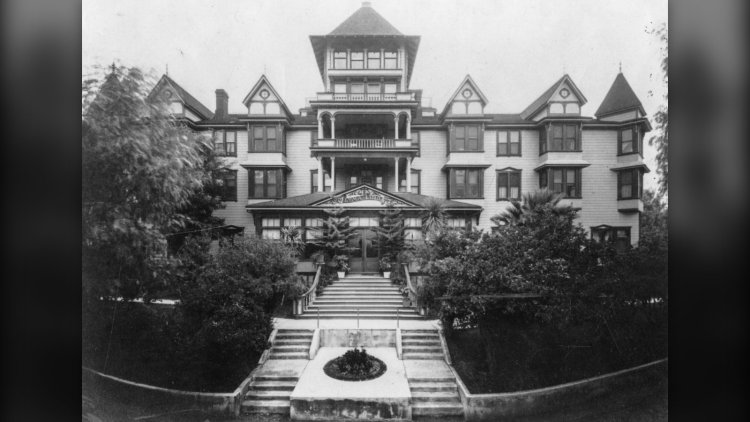
Cover: Loma Linda Sanitarium, about 1905. Loma Linda University Photo Archive. Public domain.
Notes
Scripture quotations are from the King James Version; Bible references are given in the text.
- “About Elder Frazee and This Ministry,” W. D. Frazee Sermons, wdfsermons.org. ↩
- Calvin Thrash, “John H. N. Tindall: Fifty Years a Gospel-Medical Missionary Evangelist,” 6–7, and James and David Lee, “John H. N. Tindall and the Field Training School,” 4, as quoted in Dave Fiedler, d’Sozo: Reversing the Worst Evil, 2nd ed. (Adventist City Missions, 2012), 229–30. On the entrance standard, see College of Medical Evangelists, Ninth Annual Announcement: Medical Evangelistic Course and Other Short Courses (1919–1920), 12, scholarsrepository.llu.edu. On the course as training for “medical evangelists (not physicians),” see General Conference Executive Committee minutes, July 15, 1912, quoted in Dave Fiedler, Tactics: The Full Dossier (Remnant Publications, 2019), 135. ↩
- J. H. N. Tindall, in Gospel-medical Evangelistic Campaign (Redlands, CA, 1922), 161–64, quoted in Fiedler, d’Sozo, 219–22; “John H. N. Tindall,” W. D. Frazee Sermons, wdfsermons.org. ↩
- Review and Herald, January 6, 1921; Thrash, 5; Gospel-medical Evangelistic Campaign, 7–11; all quoted in Fiedler, d’Sozo, 226–27. ↩
- The Medical Evangelist, March 15, 1928, 1; Thrash, 6–7; Lee, 4; quoted in Fiedler, d’Sozo, 228–30. ↩
- J. H. N. Tindall, “J. H. N. Tindall’s Testimony” (transcript, W. D. Frazee Sermons, 2019), 13, wdfsermons.org. ↩
- Thrash, 6–7; Lee, 4; quoted in Fiedler, d’Sozo, 230. ↩
- Ellen G. White, “Work in San Francisco,” Australasian Union Conference Record, March 1, 1901, egwwritings.org. ↩
- Thrash, 7, quoted in Fiedler, d’Sozo, 233. ↩
- Tindall, “Testimony,” 14–15. ↩
- Thrash, 8–9, quoted in Fiedler, d’Sozo, 239. ↩
- Lee, 4, quoted in Fiedler, d’Sozo, 239. ↩
- G. A. Roberts to J. H. N. Tindall, April 6, 1937, quoted in Norman R. Gulley, Gospel-Medical Evangelism, Book 1, 133, and in Fiedler, d’Sozo, 240. ↩
- Tindall, “Testimony,” 18. ↩
- “Who We Are,” ASI, asiministries.org; “A God-given Purpose,” ASI, asiministries.org. ↩
- “Wildwood Lifestyle Center,” ASI project page, asiministries.org. ↩
- Ellen G. White, Testimonies for the Church, vol. 7, 23. ↩
- Ibid., 59. ↩
Take it further
Did this speak to you? Ask for more, or ask us to pray with you.
Comments 0
No comments yet. Be the first to share a thought.