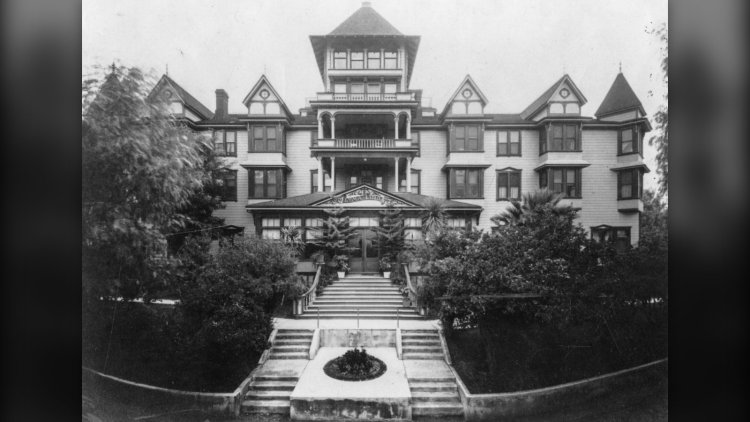
The Beehive: How One Church Opened San Francisco
Gospel in Action
Around 1900 one San Francisco church put every member to work healing and helping the city. Ellen White saw it in a dream as a hive of busy bees. Its story shows why medical missionary work is the best way to carry the gospel forward.
One commission, two hands
When Jesus sent out the twelve, He did not give them two separate jobs. “As ye go, preach, saying, The kingdom of heaven is at hand. Heal the sick, cleanse the lepers, raise the dead, cast out devils: freely ye have received, freely give” (Matt. 10:7, 8). Luke puts it in a single breath: “He sent them to preach the kingdom of God, and to heal the sick” (Luke 9:2).
The disciples were only copying what they had watched. “Jesus went about all the cities and villages, teaching in their synagogues, and preaching the gospel of the kingdom, and healing every sickness and every disease among the people” (Matt. 9:35).
At the turn of the twentieth century, one Seventh-day Adventist church in San Francisco set out to work exactly that way, with every member involved. Ellen White saw it in a dream as a hive of busy bees. This is how that hive worked, and the doors it opened.
A preacher learns a new method
Elder J. O. Corliss had preached for many years before he found this way of working. He told the 1899 General Conference how he had been taught to run tent meetings: explain the symbols of Daniel and Revelation, then “dwell upon the Sabbath and the law almost entirely.” People accepted the theory, but something did not enter their lives.1
In the summer of 1898 he tried a different plan in Ottawa. He resolved to “so preach Christ” that every truth would blend in Him. On Sundays he gave Bible health talks with Dr. Kellogg’s charts on physiology. He had no medical training, so he studied the Home Hand-Book “in the same way as we gather Bible points.” A weekday cooking school drew the city reporters, and the daily papers printed what was taught. His workers went out with “fomentation-cloths, water-bags, etc.,” treating the sick poor wherever they found them.1
The interest held for ten weeks, and the last night drew the largest crowd of all. The people said, “This people are not talking all the time on one doctrine, but they have something that will help our bodies as well as our souls.” Between twenty and thirty stepped out to obey the truth. “If I were to go into the pioneer field again,” Corliss said, “I should carry it with me.”1 By the middle of 1899 he was pastor of the church in San Francisco.2
The two beehives
Years earlier, when the San Francisco church was still small, Ellen White had a dream. “I dreamed that I saw two bee hives, one in San Francisco and one in Oakland.” In Oakland the bees were busy; in San Francisco very little was being done. “After a time my attention was again called to the hive in San Francisco, and I saw that an entire change had taken place. Great activity was seen among the bees. They were earnestly at work.” It was taken to mean that “in San Francisco there was a great work to be done.”3
On Sabbath, November 10, 1900, newly back from Australia, she stood in that church and found it “crowded to its utmost capacity.” When she invited people to give themselves to the Lord, two hundred came forward.3 For years some had thought the building too large. “Now it is well filled on the Sabbath day,” she wrote, “and we wish it were larger.”4
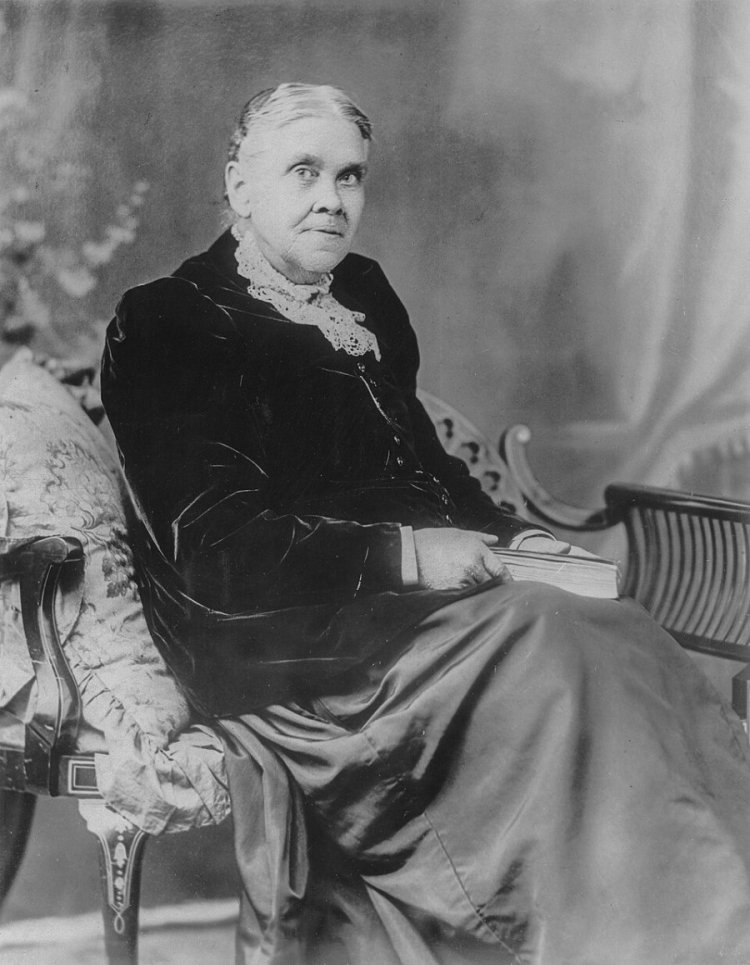
Ellen G. White in 1899, the year before her visit. Ellen G. White Estate. Public domain.
From Elder Corliss she learned what the bees were doing:
These include visiting the sick and destitute, finding homes for orphans, and work for the unemployed; nursing the sick, and teaching the love of Christ from house to house; the distribution of literature; and the conducting of classes for healthful living and the care of the sick.3
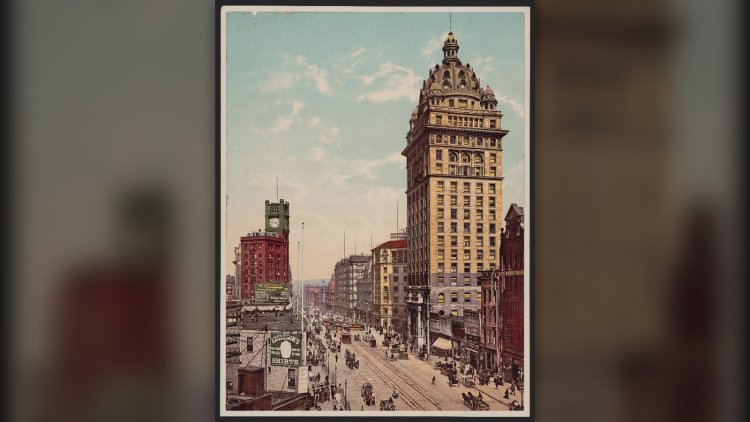
There was more. A church school met in the basement. In another part of the city stood a workingmen’s home and medical mission. On Market Street, near the City Hall, a bath establishment run as a branch of the St. Helena Sanitarium gave treatments, and a health food store nearby taught people how to reform their diet. A vegetarian café served about five hundred meals a day and closed every Sabbath. Physicians gave free care to the poor, and about twenty young Adventists were studying in the city’s medical and dental schools.3
When she ate at the café that December, the narrow dining room could not hold the crowd; “many who desired to come in were obliged to turn away.”5 Yet she called all of it only a start: “The work that has been done there is but a beginning. San Francisco is a world in itself, and the Lord’s work there is to broaden and deepen.”3
How the hive worked
Corliss explained the method to the General Conference in April 1901. He began where Jesus began: “in every instance where the Saviour has given the gospel commission, and sent out his workers, he told them to heal the sick.”6
His first conviction was that cities are not won by one eloquent preacher. “Workers are needed more than preachers in city labor,” he said. “We try to get every member of the church at work.” Some of his best workers were people who had only recently accepted the truth.6
Every Thursday night a physician took the pulpit. Drs. Coolidge and Buchanan explained the common diseases in plain words and taught simple treatments. Then the members went out. Wherever they found someone who needed help, they were “to take hold and do it free, without saying a word about their religion.”6
When the doctors met charity cases in their practice, they asked members trained on Thursday nights to nurse them for a few days, “for the love of Christ.” Corliss drew the conclusion: “One can not, after that, make such a patient think that Seventh-day Adventists are not Christians.”6
Around this core the whole church found something to do:
-
a Christian Help band that made garments for the poor and collected food
-
committees that visited the elderly, the sick and the poor, backed by a regular poor fund
-
services at the Seaman’s Home and in the city jail
-
members who sold Signs of the Times and the Pacific Health Journal; one sister sold 250 Signs and 50 health journals in a single week
-
work among the city’s Chinese and Japanese residents
-
a weekly workers’ meeting where every committee reported
Even the church’s printed invitation put members to work. It closed with a simple line: “If you know of any sick or in distress, please inform the pastor.” “And so they come,” said Corliss. The boards of the medical institutions and of the church met together, “working in perfect harmony.”6
Doors that opened
The people the members nursed began to ask questions. As Corliss told it, tears ran down their faces, and they asked, “What church do you belong to?” When told, they would say, “I have seen that little church a great many times.” Once such a person was back on his feet, he was “quite sure to appear in our church.” Many were led to say: “Do not tell me that Seventh-day Adventists are not good people; if there’s any religion in the world, they have it.”7
Then Corliss made a confession to the delegates: “During my nearly two years’ work in San Francisco, I have not preached one entire sermon on the Sabbath question.” Dr. David Paulson asked whether people were still accepting the Sabbath. “Yes,” Corliss answered, “and we have had as many as three baptisms in a month. We have never failed to have a baptism every month.” His secret was simple: “We preach Christ, and let everything cluster about him, and center in him.”7 The church even paid its own way; the conference had not spent a cent on its city expenses.6
Ellen White gave the work her full endorsement: “We have every reason to believe that the work carried on in San Francisco by Elder Corliss and his brethren, is the work that needs to be done.”4
The hive kept growing. On January 11, 1903, the church dedicated a fully equipped dispensary and treatment rooms in half of its basement, free of debt. More than a hundred treatments had been given before the dedication, and most of the crowd that night were not Adventists. With the auditorium given to preaching, a church school in one half of the basement and a dispensary in the other, the report called it “the full, all-round gospel for the whole man,” and asked, “And what is this but that which every Seventh-day Adventist church should be?”8
On April 18, 1906, an earthquake and fire laid much of San Francisco in ruins. That July, Ellen White looked back: “During the past few years, the ‘beehive’ in San Francisco has been indeed a busy one.” The warning had been given while there was still time. “Thus the warning message was given by many.”9
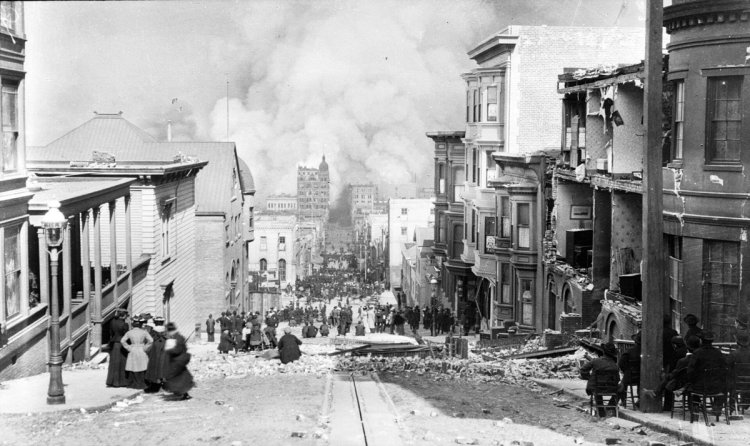
Arnold Genthe, Looking Down Sacramento Street, San Francisco, April 18, 1906. Library of Congress. Public domain.
Every church a beehive
San Francisco shows why medical missionary work is the best way to carry the gospel forward. It put the whole church to work, not just the pastor. It reached people that sermons alone could not reach. It broke down prejudice before a single doctrine was argued. And it kept Christ at the center, so that those who came to Him took the Sabbath with Him.
This is the Bible’s own method. Jesus “went about doing good, and healing all that were oppressed of the devil; for God was with him” (Acts 10:38). Ellen White confirms it: “Christ’s method alone will give true success in reaching the people. The Saviour mingled with men as one who desired their good. He showed His sympathy for them, ministered to their needs, and won their confidence. Then He bade them, ‘Follow Me.’”10
She also said where the method must go: “Every city is to be entered by workers trained to do medical missionary work. As the right hand of the third angel’s message, God’s methods of treating disease will open doors for the entrance of present truth.”11 And she said who must do it: “We have come to a time when every member of the church should take hold of medical missionary work.”12
Any congregation can begin where San Francisco began: a health professional who teaches simple remedies, members who visit the sick and the elderly, a fund for the poor, health literature, a kitchen that teaches healthful cooking, and a card that says, “If you know of anyone sick or in distress, please let us know.” The pattern has not changed: “The union of Christlike work for the body and Christlike work for the soul is the true interpretation of the gospel.”13
May God make every church a hive where all the bees are earnestly at work.

About the author
Belden Orina holds a BSc and an MSc in Computer Science from Periyar University, India, and is completing a Bachelor of Theology at Bugema University. He has a keen interest in health evangelism, lifestyle coaching and evangelistic ministry, and writes on the gospel that saves the soul and heals the body.
Cover: Market Street, San Francisco, about 1900. Photochrom by the Detroit Photographic Co. Library of Congress. Public domain.
Notes
Scripture quotations are from the King James Version; Bible references are given in the text.
- J. O. Corliss, remarks, General Conference Daily Bulletin, February 22, 1899, 51–52, egwwritings.org. ↩
- J. O. Corliss, “City Work,” General Conference Bulletin, April 21, 1901, 372, egwwritings.org. ↩
- Ellen G. White, “Work in San Francisco,” Australasian Union Conference Record, March 1, 1901, egwwritings.org. ↩
- Ellen G. White, “The Week of Prayer in San Francisco,” Review and Herald, February 19, 1901, egwwritings.org. ↩
- Ellen G. White, Manuscript 1, 1901, published in Manuscript Releases, vol. 17, 38–46, egwwritings.org. ↩
- Corliss, “City Work,” 370–371. ↩
- Ibid., 371–372. ↩
- “An Interesting Dedicatory Service,” Review and Herald, February 10, 1903, 13, egwwritings.org. ↩
- Ellen G. White, “Notes of Travel—No. 3,” Review and Herald, July 5, 1906, egwwritings.org. ↩
- Ellen G. White, The Ministry of Healing, 143. ↩
- Ellen G. White, Testimonies for the Church, vol. 7, 59. ↩
- Ibid., 62. ↩
- Ellen G. White, “The Need of Medical Missionaries,” Review and Herald, March 4, 1902, egwwritings.org. ↩
Take it further
Did this speak to you? Ask for more, or ask us to pray with you.
Comments 0
No comments yet. Be the first to share a thought.